Breaking: Rubin Observatory Unleashes Unprecedented Sky Survey
URGENT — The Vera C. Rubin Observatory high in Chile's Atacama Desert is officially entering its most critical phase, promising to track skyscraper-sized asteroids, failed supernovas, and even interstellar visitors within months.
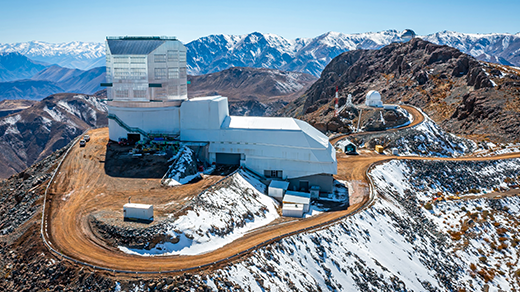
“We’re about to open a new window on the dynamic universe,” said Dr. Maria Elena Gómez, a project scientist at Rubin. “Every three nights, we’ll image the entire southern sky—detecting objects that change or move faster than ever before.”
The 8.4-meter telescope, equipped with a 3.2-gigapixel camera—the largest digital camera ever built—will scan the heavens for a decade. Its primary goal: map the solar system’s hidden population of near-Earth objects.
Skyscraper-Size Threats on the Radar
Astronomers estimate that tens of thousands of asteroids larger than 140 meters remain undiscovered. Rubin expects to find roughly 90% of them. “These are city-killer class objects,” explained Dr. Raj Patel of the Planetary Defense Coordination Office. “Rubin gives us our best chance to see them before they see us.”
The survey will also pinpoint smaller rocks down to 100 meters, dramatically improving impact risk models. “We’ll move from statistical guessing to actual cataloging,” Patel added.
Failed Supernovas and Stellar Ghosts
Beyond asteroids, Rubin will catch “failed supernovas”—massive stars that collapse directly into black holes without a visible explosion. Only a handful have ever been observed. “Rubin will see dozens every year,” said Dr. Elena Torres, a supernova expert. “These events are cosmic fossils that tell us how stars die in the dark.”
The telescope’s rapid cadence also allows it to capture supernovae within hours of their detonation, providing real-time alerts to ground-based observatories worldwide.
Interstellar Interlopers Will Be Tracked in Real Time
Rubin is uniquely designed to spot interstellar objects like ‘Oumuamua and Borisov—comets or asteroids from other star systems. “We expect to detect one or two per year,” said Dr. Gómez. “That’s revolutionary for understanding planet formation across the galaxy.”
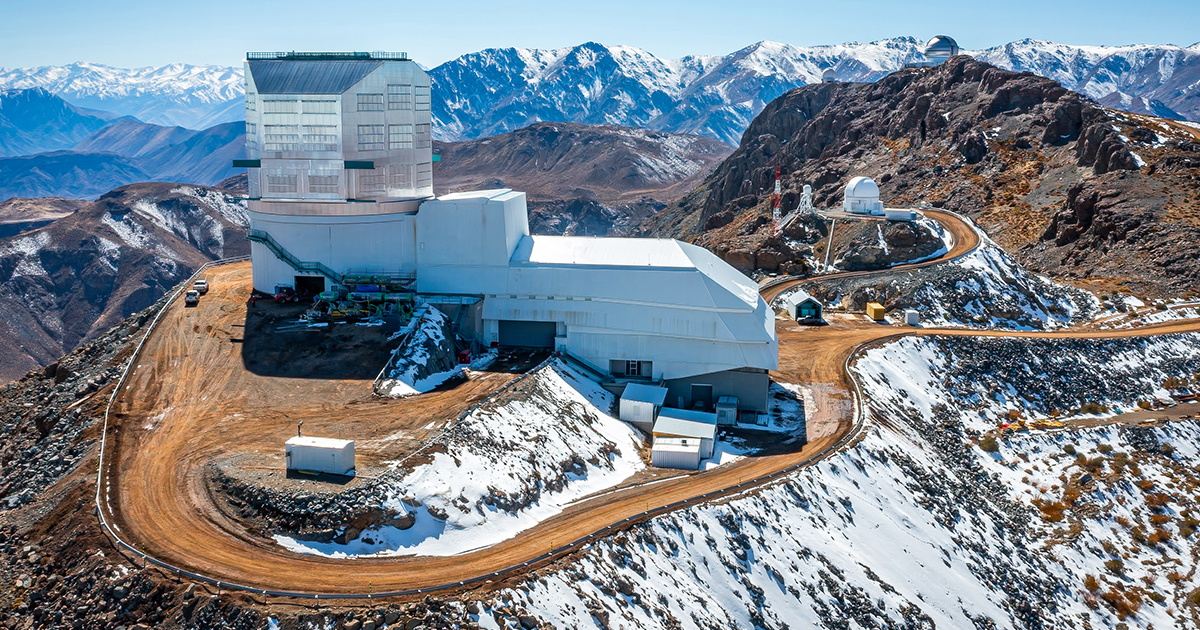
Previous surveys missed most because they scanned too slowly. Rubin’s deep, wide-field images will capture fast-moving objects as tiny streaks, then automatically flag them for follow-up.
Background
First conceived in the 1990s as the Dark Matter Telescope, Rubin was renamed after astronomer Vera Rubin in 2020. Its design prioritizes survey speed over resolution, covering 18,000 square degrees of sky each night. The project cost $600 million and took 15 years to build.
Construction finished in 2021, but commissioning has been delayed by pandemic-related issues and final camera testing. Now, with the camera installed and test images already streaming, first official science observations are expected within weeks.
The Legacy Survey of Space and Time (LSST) will generate 20 terabytes of data per night—equivalent to 4,000 feature-length films. All data will be publicly available within 24 hours.
What This Means
The implications stretch beyond asteroid defense. “Rubin will fundamentally change how we see the night sky,” said Dr. Torres. “Instead of a static postcard, we’ll watch a cosmos in motion.”
For planetary defense, early detection means more time to divert a dangerous asteroid. For astrophysics, it means breakthroughs in dark matter mapping, stellar evolution, and the very structure of the Milky Way.
“Every time we’ve opened a new window on the universe, we’ve found surprises,” Dr. Gómez concluded. “Rubin’s window will be the widest, deepest, and fastest yet.”