On April 25, 2026, NASA's Curiosity rover drilled into a Martian rock nicknamed "Atacama." But when it withdrew its robotic arm, the entire rock came along for the ride. For nearly a week, engineers on Earth worked to free the stubborn sample. Here are seven surprising details about this unusual event.
1. The Rock's Name and Origin
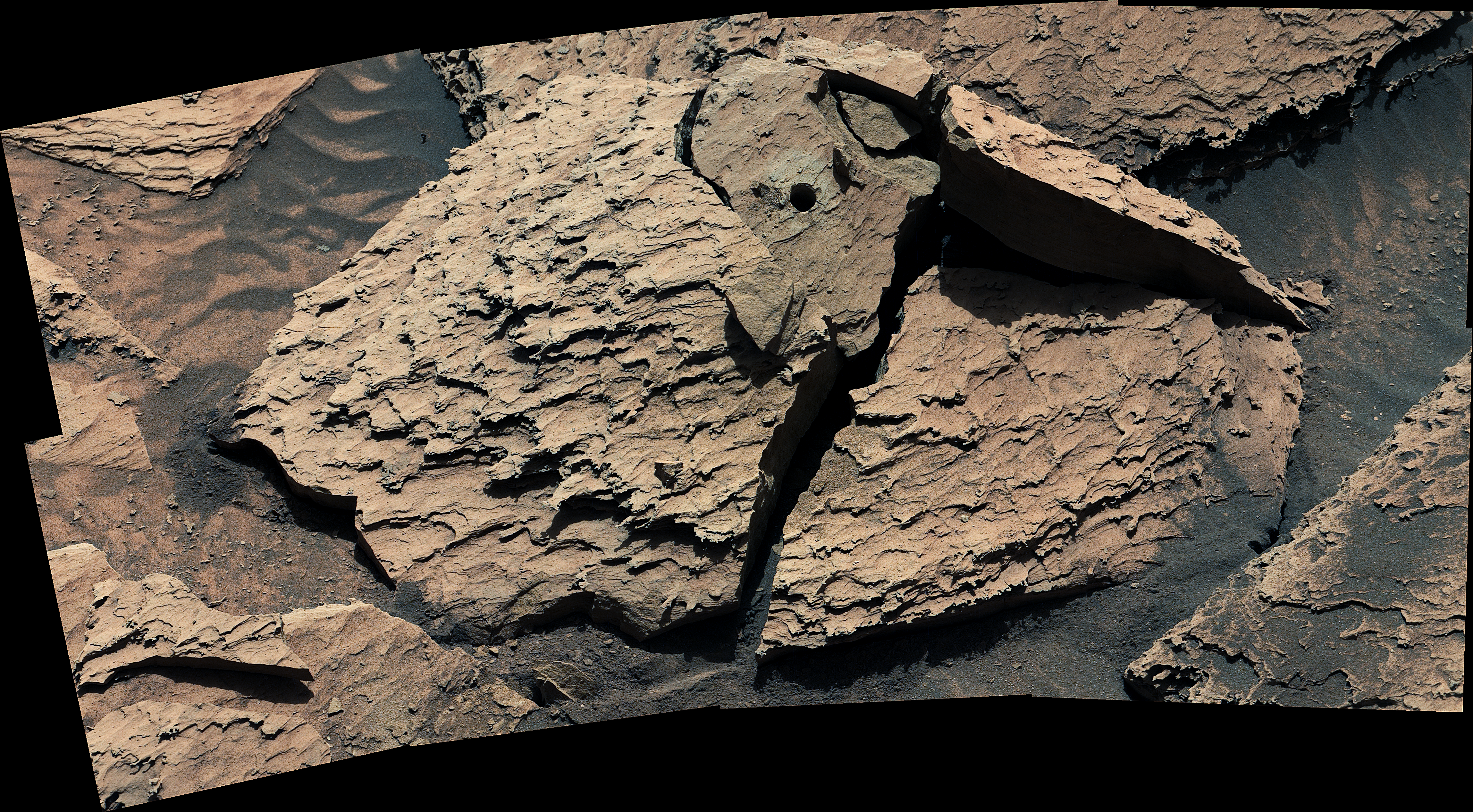
The target rock was dubbed "Atacama" by the mission team, a nod to Chile's Atacama Desert—one of Earth's driest places and a frequent analog for Martian conditions. This Martian rock likely originated as sedimentary material, possibly shaped by ancient water or wind. Its composition remains under analysis, but the drilling incident provided an unexpected opportunity to study a whole rock outcrop that was literally pulled free. The nickname reflects the team's lighthearted approach to a challenge that could have been far more serious.
2. The Drilling Incident
Curiosity's percussive drill is designed to penetrate rock and collect powdered samples. Atacama, however, proved unusually cohesive. After completing the drill hole on April 25, the rover retracted its arm—and the entire rock came with it, stuck to the drill bit. This was a first for the mission. Engineers had to devise a method to detach the rock without damaging the drill or the rover's sensitive instruments. The incident highlighted the unpredictable nature of Martian geology and the adaptability of the rover's design.
3. Size and Weight
Atacama measured about 1.5 feet (0.46 meters) in diameter at its base and was roughly 6 inches (15 centimeters) thick. On Earth, it would weigh approximately 28.6 pounds (13 kilograms); on Mars, with its lower gravity (about 38% of Earth's), the rock felt closer to 10.9 pounds (4.9 kilograms). These dimensions made it large enough to be clearly visible in close-up images taken by Curiosity's Mast Camera, which later showed the circular drill hole near the rock's center.
4. How Engineers Solved It
For several days after the rock became stuck, the rover team commanded Curiosity to reposition its arm and gently vibrate the drill. These maneuvers were carefully choreographed to avoid stressing the drill's hardware or causing the rock to crack unpredictably. Finally, on May 1, 2026, the rock detached—but it broke into several pieces upon falling. The fragments were later imaged to ensure none posed a hazard to the rover's wheels. This creative problem-solving exemplifies the remote troubleshooting that drives planetary exploration.
5. Close-Up Images
On May 6, Curiosity's Mast Camera (Mastcam) captured a detailed close-up of Atacama as it lay on the ground. The image revealed the rock's textured surface and the clean, circular hole left by the drill. Engineers used these pictures to assess whether any sample powder was lost and to plan subsequent observations. The images also provided a rare view of a rock's interior structure after being partially drilled—a bonus for scientists studying Martian geology.
6. Scientific Significance
Though the incident was unexpected, it gave scientists a unique chance to examine a rock that had been mechanically stressed. The broken pieces exposed fresh surfaces, revealing clues about Atacama's mineral composition and cementation. Such data help reconstruct Mars' ancient environments—whether the rock formed in a lakebed, river channel, or volcanic setting. Moreover, the successful detachment proved that Curiosity's drill can handle sticky situations, extending its capabilities for future sampling.
7. What Happened Next
After freeing itself from Atacama, Curiosity resumed its ascent of Mount Sharp, the layered mound within Gale Crater. The scattered fragments were left behind, but the event reminded the team that even routine operations can produce surprises. The rock's nickname will likely endure in mission logs. Meanwhile, engineers are studying the incident to improve future sampling strategies—both for Curiosity and for upcoming missions like the Mars Sample Return campaign.
The Atacama rock incident underscores the challenges and rewards of exploring Mars from millions of miles away. Even a pesky rock can teach us something new. Curiosity continues its journey, leaving behind a small pile of broken pieces—and a valuable lesson in planetary perseverance.