Breaking News: Swift 6.3 Released with Game-Changing Features
The Swift team has officially released Swift 6.3, a significant update that extends the language's reach into new domains. The release introduces a dedicated Android SDK, deeper C interoperability, and major improvements for embedded development.
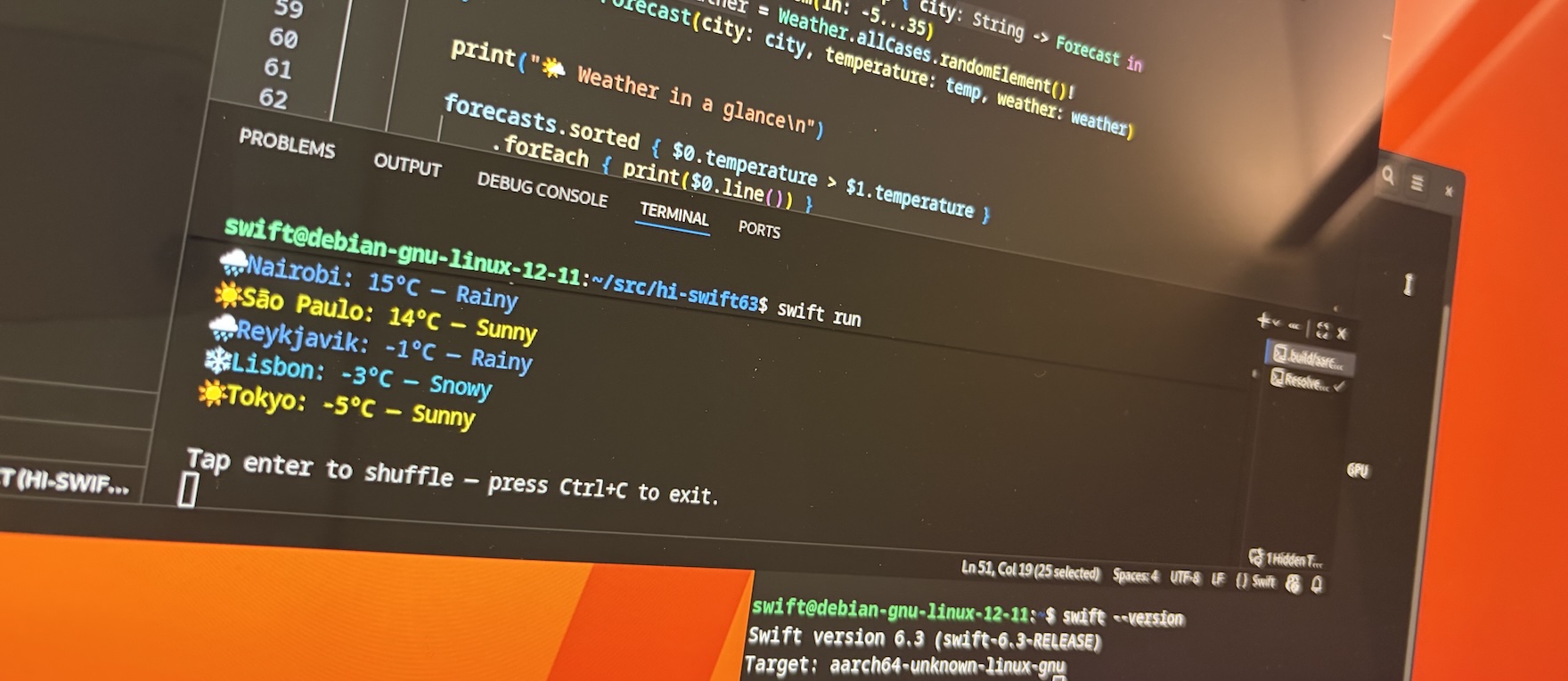
“Swift 6.3 is designed to make the language more accessible across the entire software stack,” said a Swift core team member. “From firmware to cloud services, developers now have the tools they need to use Swift everywhere.”
Revolutionary C Interoperability
Swift 6.3 introduces the @c attribute, allowing developers to expose Swift functions and enums directly to C code. This attribute automatically generates corresponding C declarations in the project’s header files.
“The @c attribute bridges the gap between Swift and C in a way that feels native,” explained a Swift language engineer. “You can now write Swift implementations for C header declarations using @implementation in tandem.”
Additionally, developers can provide custom names for generated C symbols using syntax like @c(MyLibrary_callFromC). This ensures compatibility with existing C codebases.
Module Selectors Eliminate Ambiguity
Swift 6.3 adds module selectors to disambiguate API calls when multiple imported modules share the same name. For example, ModuleA::getValue() and ModuleB::getValue() can now coexist without conflict.
“Module selectors are a long-requested feature,” noted a Swift community advocate. “They simplify code that relies on multiple libraries with overlapping APIs.”
The update also allows accessing concurrency and string processing APIs using the Swift module name directly, such as Swift::Task.
Finer-Grained Performance Control for Libraries
Swift 6.3 introduces new attributes for library authors to control compiler optimizations. The @specialize attribute provides pre-specialized implementations for generic APIs, while @inline(always) guarantees inlining for direct calls.
“These attributes give library authors the precision they need to optimize without sacrificing clarity,” said a performance engineer. “We’re seeing major speedups in generic code paths.”
Official Swift SDK for Android
For the first time, Swift 6.3 includes an official Swift SDK for Android, enabling developers to build mobile apps with Swift on Android platforms. This opens up cross-platform development possibilities for Swift-focused teams.
“The Android SDK marks a monumental step for Swift’s portability,” remarked a mobile developer. “We can now share core logic across iOS and Android without rewriting in Java or Kotlin.”
Embedded and Cross-Platform Tooling Upgrades
The release enhances cross-platform build tooling and makes Swift more viable in embedded environments. This includes better support for resource-constrained devices and integration with embedded C libraries.
“Embedded systems haven’t historically been a sweet spot for Swift,” noted an IoT specialist. “Swift 6.3 changes that with leaner runtime and direct C access.”
Background
Swift was created by Apple in 2014 as a modern, safe programming language for iOS and macOS development. Over the years, the open-source project has expanded to Linux, Windows, and now Android. Its design philosophy emphasizes safety, performance, and expressiveness for every layer of the software stack.
The 6.3 release is part of an ongoing effort to make Swift a universal language, bridging gaps between high-level application development and low-level systems programming. The addition of C interoperability and Android support directly addresses long-standing community requests.
What This Means
For developers, Swift 6.3 dramatically reduces friction when working with C codebases, which remain ubiquitous in operating systems and embedded firmware. The Android SDK also allows Swift developers to target the world’s largest mobile platform natively, potentially increasing adoption in cross-platform projects.
“This is more than just a point release—it’s a strategic expansion,” said a tech analyst. “Swift is positioning itself as a first-class language for not just Apple ecosystems, but for the entire software industry.”
Down the line, these improvements could lead to Swift replacing languages like C for certain tasks, while also competing with Kotlin Multiplatform in mobile development. The immediate effect is a more versatile, developer-friendly toolset.