Facebook Groups have become a go-to destination for millions seeking trusted advice, niche expertise, and community-driven answers. But until recently, finding the right post or comment felt like digging through a digital haystack. A new set of search improvements—powered by a hybrid retrieval architecture and automated evaluation—now promises to transform how we discover, consume, and validate community knowledge. Here are the seven key upgrades that are revolutionizing Facebook Groups search.
1. A Hybrid Retrieval Architecture That Understands Synonyms
Old keyword-based search was literal—it matched exact words, leaving you empty-handed if you used different phrasing. For example, searching for “small individual cakes with frosting” returned zero results if the group only said “cupcakes.” The new hybrid system blends lexical matching with neural embeddings, interpreting synonyms and context. Now, a query for “Italian coffee drink” reliably surfaces posts about “cappuccino” even when “coffee” isn’t mentioned. This semantic understanding closes the gap between natural language and community vocabulary.

2. Automated Model-Based Evaluation for Continuous Improvement
To ensure search results stay relevant, Facebook implemented automated model-based evaluation. Instead of relying solely on manual testing, algorithms assess result quality at scale—flagging low-relevance matches, tracking user engagement, and surfacing the most helpful content. This self-improving feedback loop means the system gets smarter over time, adapting to evolving community language and behavior without human bottlenecks.
3. Solving the Discovery Friction: From Exact Match to Intent Match
Discovery was the first major friction point. Lexical systems failed to capture user intent, forcing you to guess the exact phrasing used by others. With the hybrid architecture, the search engine now understands concepts, not just words. This means a parent searching for “bedtime routine for toddlers” will find posts titled “how to get your toddler to sleep,” even if no direct word overlap exists. The result? Fewer zero-result searches and faster access to relevant advice.
4. Reducing the Consumption Effort Tax
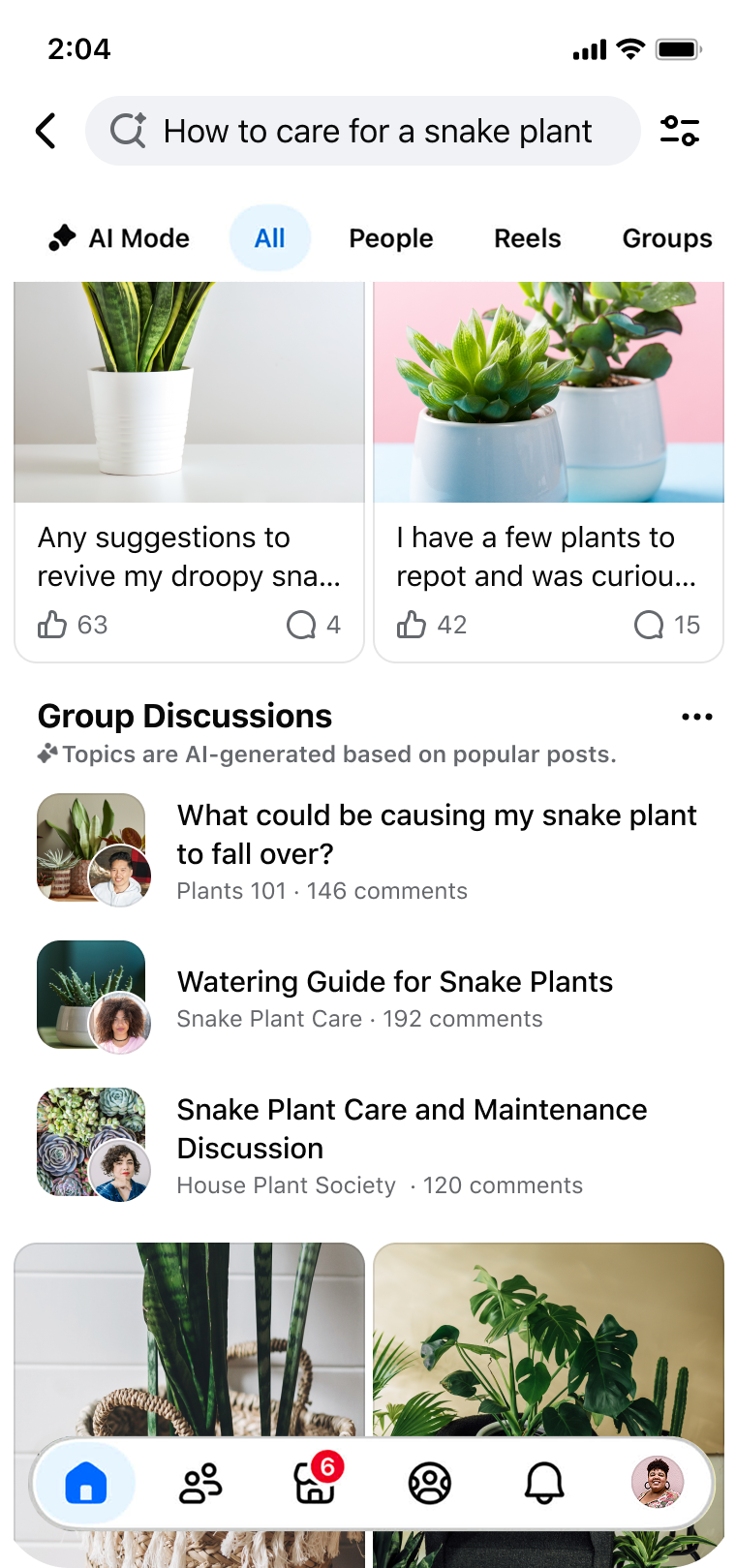
Even when you found the right thread, reading through dozens of comments to extract a consensus was exhausting. Think of searching for snake plant care tips and having to piece together a watering schedule from scattered replies. The new system ranks and surfaces the most helpful comments, using engagement signals (likes, replies, authoritative badges) to elevate actionable answers. This slashes the effort tax—you now get summaries rather than puzzles.
5. Unlocking Validation Through Community Wisdom
Buying a vintage Corvette on Facebook Marketplace? You want real opinions from gearheads, but that wisdom was trapped in group discussions. The updated search makes it easier to validate decisions by pulling relevant threads directly within the shopping experience. Instead of manual digging, you can see community reviews, purchase advice, and trusted opinions instantly. This feature turns group knowledge into a powerful decision-making tool.
6. Tangible Engagement and Relevance Gains—Without Higher Error Rates
Early metrics show that the new search engine boosts engagement by helping people find what they need faster. Relevance scores have improved significantly, yet error rates remain flat (no increase in spam or off-topic results). This balance proves that richer retrieval doesn’t have to sacrifice quality. Users spend less time scrolling and more time interacting with the content that matters, making community interactions more productive.
7. A Foundation for Future Community Knowledge Discovery
This overhaul isn’t a one-time fix—it’s a scalable architecture designed to evolve. As Facebook Groups grow, the hybrid system can incorporate new data sources (images, videos, comment chains) and refine its models without a full rebuild. The automated evaluation pipeline accelerates rollout of improvements, ensuring that the search experience keeps pace with user expectations. It lays the groundwork for even smarter AI-driven community knowledge retrieval down the road.
These seven upgrades represent a fundamental shift in how we interact with community knowledge. By blending semantic search, automated quality control, and user-centric design, Facebook Groups search is no longer a scavenger hunt—it’s a guided tour through the best of what communities have to offer.