Welcome to our comprehensive Q&A session on TurboQuant, Google's recently unveiled algorithmic suite and library designed to revolutionize the efficiency of large language models (LLMs) and vector search engines. In the rapidly evolving landscape of AI, managing computational costs while maintaining accuracy is paramount. TurboQuant addresses this by bringing advanced quantization and compression techniques to the forefront. Below, we answer key questions to help you understand its significance, particularly its role in retrieval-augmented generation (RAG) systems.
What is TurboQuant and who created it?
TurboQuant is a novel algorithmic suite and library developed by Google. Its primary purpose is to apply advanced quantization and compression methods to large language models (LLMs) and vector search engines. Quantization reduces the precision of numbers used in models (e.g., from 32-bit floating point to 8-bit integers), slashing memory and computation requirements. Compression further shrinks model size without significant loss of accuracy. By offering a unified toolkit, TurboQuant simplifies the deployment of efficient AI systems, making it easier for developers to optimize performance on resource-constrained hardware. The library is designed to be modular, allowing users to customize quantization schemes for different model architectures and use cases.
How does TurboQuant enhance large language models?
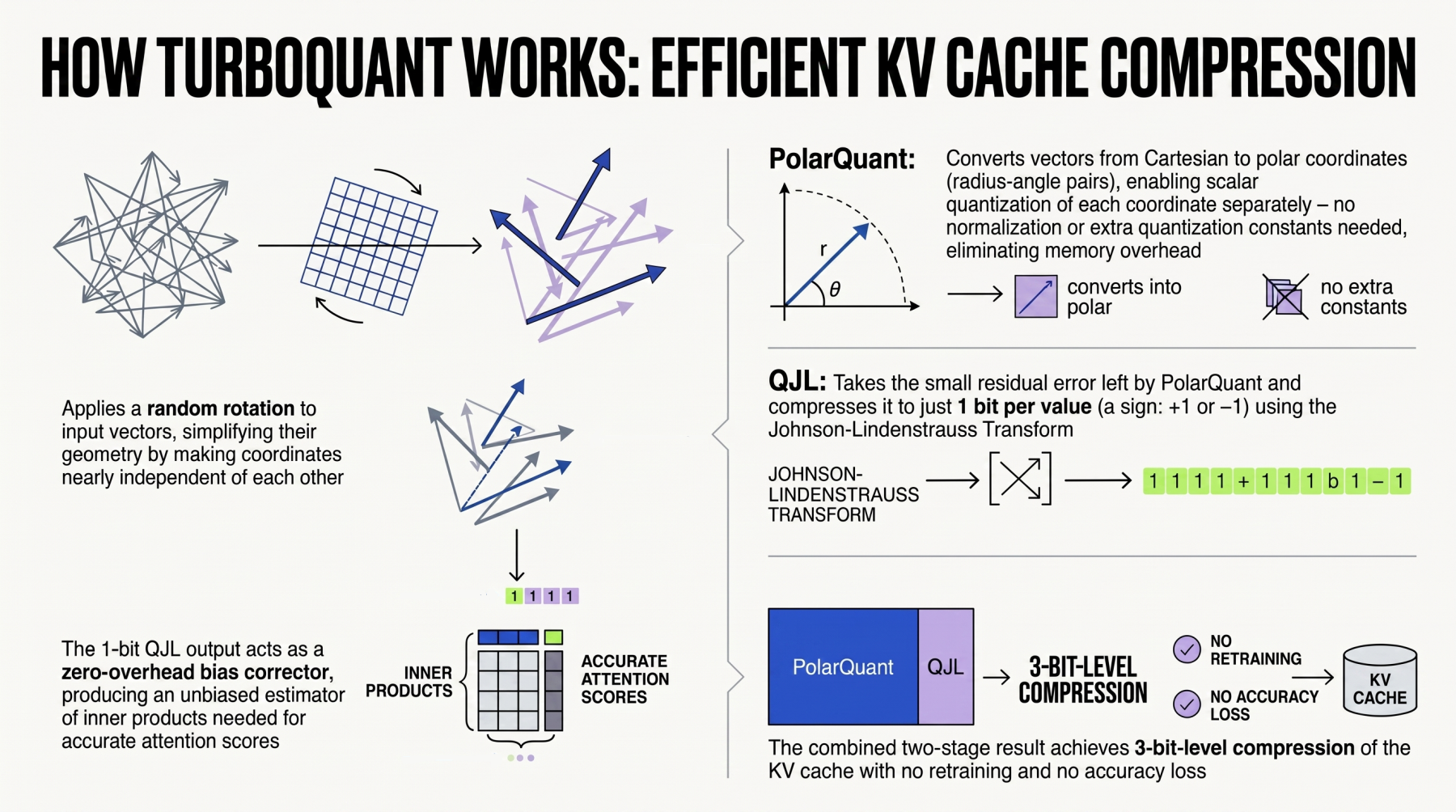
Large language models like GPT or Llama are notoriously memory- and compute-intensive. TurboQuant enhances them by applying state-of-the-art quantization techniques that preserve model quality while drastically reducing the number of bits per parameter. For instance, it can lower storage requirements by 4x or more (e.g., from 16-bit to 4-bit quantization) with minimal perplexity degradation. This enables LLMs to run faster on GPUs and even deploy on CPUs or edge devices. The library includes calibration algorithms that adjust quantization parameters based on actual data distributions, ensuring that important patterns are preserved. TurboQuant also supports mixed-precision quantization, where different layers or weights use different bit widths, optimizing the trade-off between speed and accuracy.
What role does TurboQuant play in vector search engines?
Vector search engines index and retrieve information using high-dimensional embeddings. These engines often store millions or billions of vectors, leading to massive memory footprints. TurboQuant provides specific compression pipelines for these vectors, reducing their storage while maintaining retrieval accuracy. Key techniques include scalar quantization (rounding vector components to fewer bits) and product quantization (decomposing vectors into sub-vectors and quantizing each separately). By integrating with libraries like FAISS or ScaNN, TurboQuant accelerates search speed and lowers hosting costs. This is especially crucial for real-time recommendation systems and semantic search, where latency and scalability are top priorities.
Why is TurboQuant considered indispensable for RAG systems?
Retrieval-augmented generation (RAG) systems combine a retriever (often a vector search engine) with a generator (an LLM). TurboQuant optimizes both components, making it a game-changer for RAG. The retriever uses compressed vectors to quickly find relevant document chunks, while the generator benefits from quantized weights to produce fluent responses. Without such compression, RAG systems would be prohibitively expensive to run at scale—requiring massive memory for the knowledge base and high compute for the LLM. TurboQuant enables RAG to be deployed on lower-tier hardware, widening access to accurate, real-time question answering and conversational AI. Its methods ensure that the retrieval quality remains high even after aggressive compression, directly improving the final generated output.
What are the key techniques behind TurboQuant?
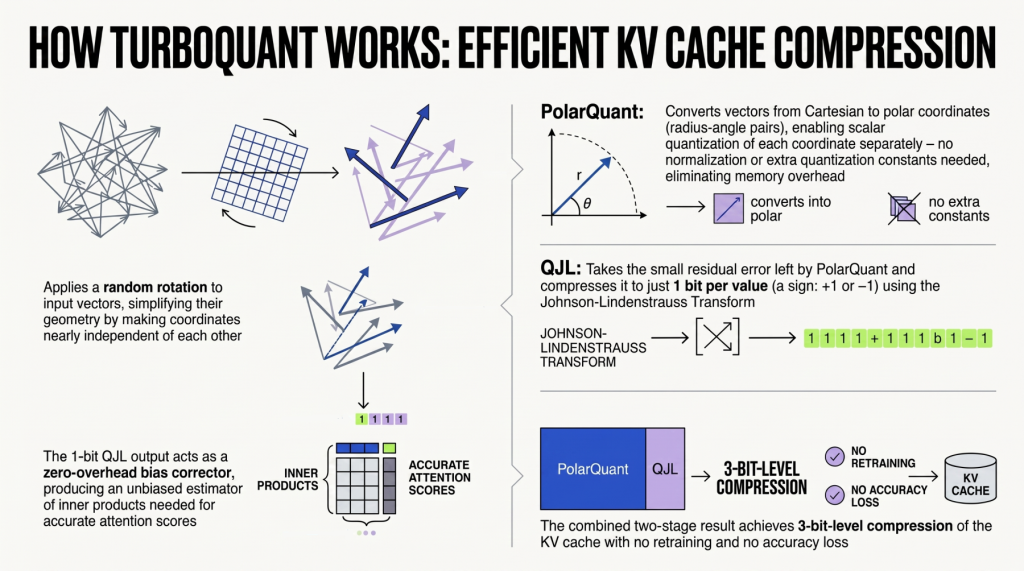
TurboQuant employs a variety of advanced techniques, including calibrated uniform quantization, where clipping ranges are learned from data to minimize error. It also uses group-wise quantization, dividing weights into small groups and applying different scaling factors for better precision. For activations, it features per-tensor dynamic quantization, adjusting scales on-the-fly for each input. Additionally, the library supports iterative mixed-precision search to find the optimal bit allocation across layers. For vector compression, OPQ (Optimized Product Quantization) and LSH (Locality-Sensitive Hashing) prep are integrated. These techniques collectively deliver high compression ratios while maintaining task accuracy, as demonstrated in Google's benchmarks.
How can developers start using TurboQuant?
To get started with TurboQuant, developers can visit the official GitHub repository hosted by Google. The library is designed with Python bindings and supports popular deep learning frameworks like TensorFlow, PyTorch, and JAX. Installation is straightforward via pip or by building from source. The documentation provides step-by-step tutorials for quantizing an LLM, compressing a vector index, and integrating both into a RAG pipeline. Developers can experiment with pre-configured quantization recipes or customize their own using the high-level API. Additionally, the repository includes benchmark scripts to compare performance before and after compression, helping users quantify memory savings and speed gains for their specific models and hardware.