The Stratum v2 Working Group has gained significant momentum with the addition of seven major players in the Bitcoin mining ecosystem: ANTPOOL, Block Inc, F2Pool, Foundry, Spiderpool, MARA Foundation, and DMND. This expansion signals a collective move toward a more open, efficient, and decentralized mining future. This Q&A explores the details of this development and the implications of the Stratum v2 protocol.
1. What is Stratum v2 and why does it matter for Bitcoin mining?
Stratum v2 is an upgraded version of the original Stratum mining protocol that has served as the backbone of Bitcoin mining communication for years. Developed and maintained by the Stratum v2 Working Group, this new protocol introduces several critical improvements. First, it enables much more efficient management of large mining fleets, reducing bandwidth usage and improving overall operational effectiveness. Second, it comes with end-to-end encryption, enhancing security and privacy for miners. Third—and perhaps most importantly—Stratum v2 allows individual miners to produce their own block templates when working with supporting pools. This feature directly empowers miners to have a say in which transactions get included in blocks, a game-changer for mining decentralization. By reducing the centralized power of pools over block construction, Stratum v2 helps align mining with Bitcoin’s original vision of distributed consensus. Its adoption is seen as a major step forward for the health and resilience of the network.
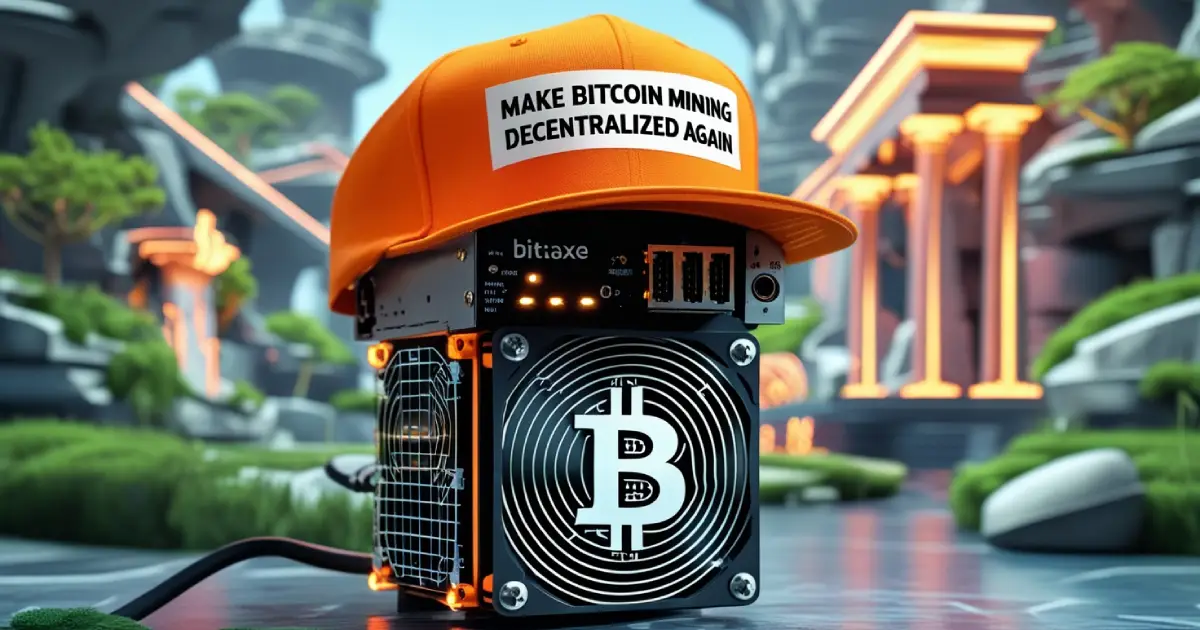
2. Who joined the Stratum v2 Working Group and what does this mean?
The new members are ANTPOOL, Block Inc, F2Pool, Foundry, Spiderpool, MARA Foundation, and DMND. These are not small players—they represent some of the largest mining pools and infrastructure providers in the Bitcoin ecosystem. Their collective decision to join the working group carries immense weight. For the working group, founded in 2022 by Braiins and Spiral, adding these heavyweights means gaining access to real-world testing, feedback, and scaling capabilities. It also ensures that the protocol is developed with practical, large-scale operations in mind, not just theoretical ideals. The move demonstrates a growing consensus among industry leaders that Stratum v2 is the necessary direction for mining’s future. With such influential members on board, the protocol is far more likely to achieve widespread interoperability and adoption. This is a strong signal that the mining sector is ready to collaborate on upgrading the infrastructure that underpins the entire Bitcoin network.
3. How does Stratum v2 improve efficiency and security for miners?
Efficiency gains come primarily from reduced data overhead. Stratum v2 minimizes the amount of communication required between miners and pools, which is particularly beneficial for miners in bandwidth-constrained environments. As Kenway Wang, CTO of Spiderpool, noted, “Stratum V2 supports this by enabling miner-constructed templates, while also improving efficiency, especially for miners in bandwidth-constrained environments.” On the security front, end-to-end encryption ensures that communications between miners and pools cannot be intercepted or tampered with. This protects against man-in-the-middle attacks and other malicious interference. Additionally, the protocol allows for more granular control over mining jobs, reducing the risk of orphaned blocks and wasted hash power. Together, these improvements mean miners can operate more profitably and securely, even in challenging network conditions. The working group’s focus on vendor-neutral specifications ensures that these benefits are available to all miners, regardless of their hardware or software choices.
4. What is the role of the Stratum v2 Working Group?
The Stratum v2 Working Group is an open collaboration initiative dedicated to advancing the development, adoption, and interoperability of the Stratum v2 mining protocol. It maintains a public specification that anyone can review and implement, ensuring the protocol remains truly open and vendor-neutral. The group acts as a coordination layer between developers, pool operators, hardware manufacturers, and other industry stakeholders. By bringing together diverse voices, it prevents any single entity from dominating the protocol’s evolution. The working group also provides testing frameworks and documentation to help implementers integrate Stratum v2 correctly. With the addition of ANTPOOL, Block Inc, and others, the group now has even more resources and expertise to ensure the protocol works flawlessly at scale. This collaborative approach is essential because mining involves complex interactions between many different systems; a protocol that works only in theory is useless without real-world validation.
5. How does this development promote decentralization in Bitcoin mining?
Decentralization is at the core of the Stratum v2 effort. The original Stratum protocol left pools in full control of block construction, concentrating decision-making power. With Stratum v2’s support for miner-constructed block templates, individual miners can select which transactions to include in the blocks they mine. This shifts some power back from pool operators to individual participants. The working group’s new members—especially those like MARA Foundation and DMND that focus on mining hardware and infrastructure—bring valuable perspectives on how to implement this feature practically. Andy Zhou, CEO of ANTPOOL, emphasized that “aligning around an open, interoperable standard enables the industry to collaborate more effectively and drive improvements in efficiency, security and decentralization.” By having a diverse set of stakeholders involved, the protocol is more likely to support a wide range of mining setups, from small home miners to large-scale facilities. This inclusivity is key to maintaining Bitcoin’s decentralized ethos as the network grows.
6. What was the original context of this announcement and who made it?
The announcement was published on Bitcoin Magazine and written by Shinobi, a well-known Bitcoin mining analyst. It revealed that the Stratum v2 Working Group—founded by Braiins (the company behind Slush Pool) and Spiral (Block’s Bitcoin-focused open-source arm)—had welcomed seven new members. Each of these organizations is a significant player: ANTPOOL is one of the largest mining pools, Block Inc is the parent company of Square and Cash App, F2Pool is a global pool, Foundry is a major institutional miner, Spiderpool is a rising pool with a focus on decentralization, MARA Foundation supports the MARA mining ecosystem, and DMND is a mining hardware firm. The inclusion of such a diverse and powerful group indicates that the protocol is moving from theoretical development to practical deployment. The timing suggests that the industry is ready for an upgrade to the mining protocol stack, and the working group is positioned to lead that transition.
7. What are the next steps for Stratum v2 adoption?
With these new members, the working group will focus on ensuring proper functioning and compatibility across real-world mining operations at scale. This involves extensive testing, refining the specification based on feedback, and creating reference implementations. The group will likely prioritize features that large mining fleets need, such as efficient job distribution and failover handling. Additionally, they will work on educational resources to help smaller miners and pool operators transition. The growing consensus around Stratum v2 means we can expect more mining pools to announce support in the coming months. For end users, this will eventually translate to more choice in which pool to mine with and more control over their mining operations. The ultimate goal is for Stratum v2 to become the standard protocol used by all Bitcoin miners, similar to how HTTP became the standard for web browsing. The involvement of major players like Block Inc and Foundry significantly accelerates that timeline.