Breaking News: Scorpions Harden Their Pincers and Stingers with Metal on Purpose
Scorpions have long been known to incorporate metals like zinc, manganese, and iron into their pincers (chelae) and stingers (telson). A new study confirms this is not accidental contamination—it's an evolutionary adaptation. Learn the background.
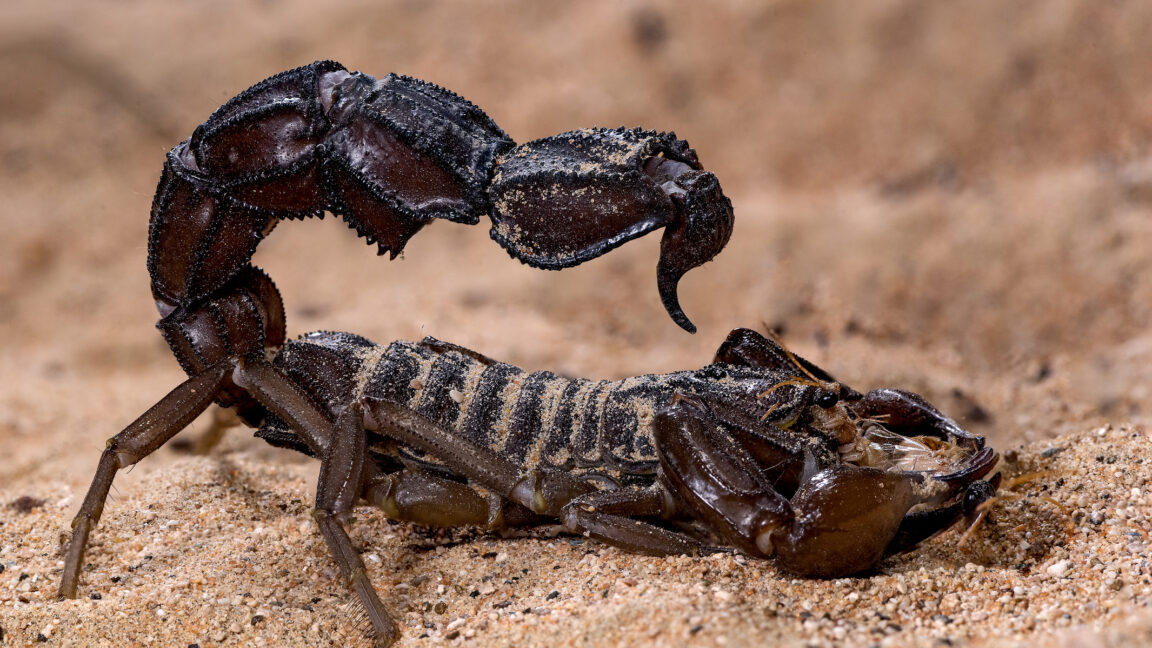
“That the metals are there has been known since the 1990s,” said Sam Campbell, a biologist at the University of Queensland. “What we didn’t know was whether scorpions evolved to be like that or if it was accidental and they were just picking the metals up from the environment.”
How the Study Worked
Campbell and his colleagues examined how metals are distributed across stingers and pincers in different scorpion species. They published their findings in the Journal of The Royal Society Interface. Jump to what this means.
The team analyzed specimens from multiple environments, including deserts and rainforests. They found that metal concentrations were consistently higher in cutting and piercing parts than in other tissues.
“There was nothing accidental about it,” Campbell emphasized. The pattern held across species, suggesting a deliberate biological mechanism.
Background: A 30-Year Mystery Solved
Scientists first detected metals in scorpion exoskeletons in the 1990s. Until now, no one knew whether scorpions actively deposited metals or simply absorbed them from soil and water.
Zinc hardens pincer edges, making them more durable for crushing prey. Manganese and iron reinforce stingers, helping them penetrate tough skin. These metals are often 10 to 20 times more concentrated than in the surrounding environment.
What This Means
This discovery shows that scorpions evolved a sophisticated biomineralization process. It could inspire new materials science—for example, creating self-sharpening tools or bio-inspired armor.
“If we can understand how scorpions control metal deposition, we might replicate it for industrial coatings,” said Campbell. The study also raises questions about how other arthropods strengthen their weapons.
Next Steps
The team plans to investigate which genes regulate metal accumulation. They also want to test whether environmental metal pollution affects scorpion weapon quality. Return to background.
This article was updated with quotes from the lead researcher.
- Key findings: Metal reinforcement is not accidental but evolved.
- Species studied: Multiple scorpion species across different habitats.
- Metals found: Zinc, manganese, iron.