Introduction: A Shocking Transformation Captured from Space
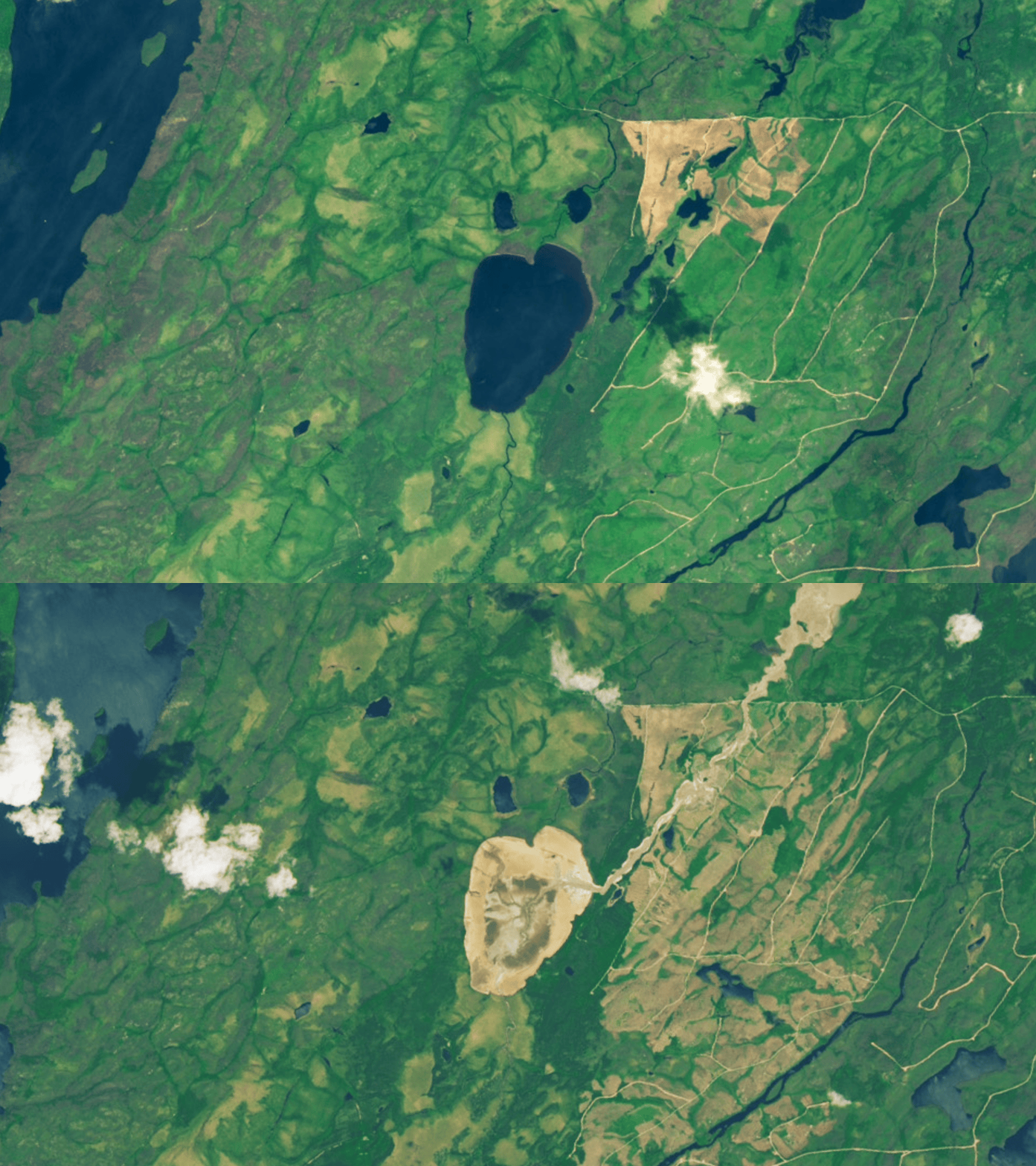
What happens when a body of water shaped like a shocked emoji suddenly disappears? For Lake Rouge in British Columbia, Canada, the answer is a dramatic collapse that left only a muddy scar. Recent satellite images from NASA's Earth Observatory reveal the stark before-and-after of this geological event, which drained the lake entirely in a matter of days. The incident offers a rare glimpse into the complex interplay of natural forces that can reshape landscapes almost overnight.
Satellite Eyewitness: Before and After
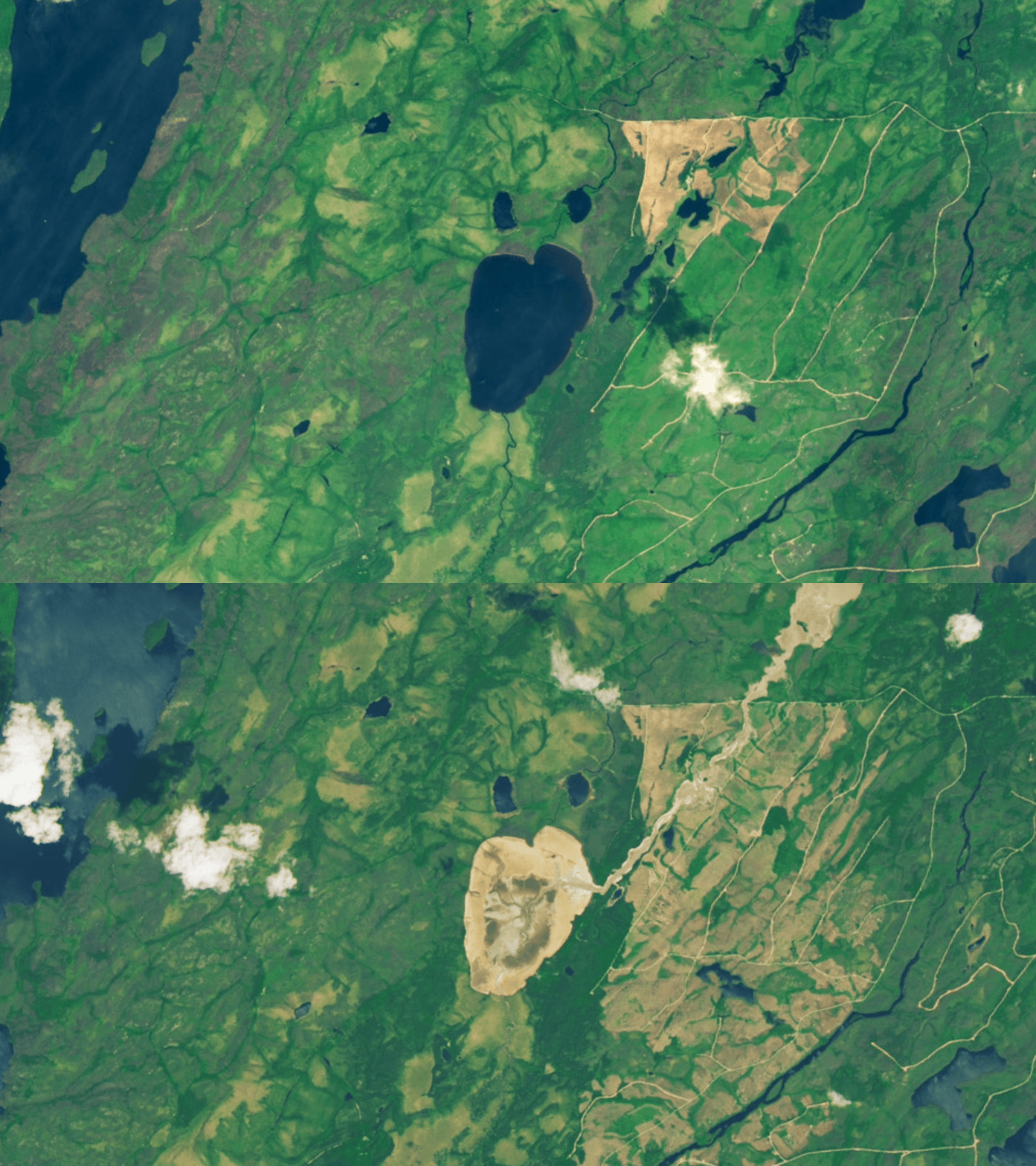
Two images taken by the Landsat 8 satellite show the lake in late July 2024 and then just weeks later in early August. In the first picture, Lake Rouge appears as a dark blue, roughly rectangular body with a distinct notch on its northern shore, reminiscent of a mouth agape—the 'emoji' shape that earned it its nickname. By August, the water had vanished, replaced by a grayish-brown expanse of sediment and debris. Scientists from the University of Calgary and the British Columbia Geological Survey analyzed the images and confirmed that a massive debris slide had occurred along the lake's eastern bank, triggering a landslide-like collapse that opened a channel for the water to escape.
The collapse, estimated to be over 100 meters wide, allowed the lake's water to drain into the adjacent valley within hours. Local residents reported a loud rumbling sound followed by a sudden drop in water levels. The event was so rapid that no one had time to capture it on video, but the satellite's orbit happened to record the aftermath.
The Perfect Storm: Why Lake Rouge Drained
Experts point to a combination of factors that led to this dramatic failure. The region had experienced an unusually wet spring, saturating the soil and weakening the underlying bedrock. A 4.2-magnitude earthquake in early July may have further destabilized the bank, creating fractures that later gave way. Additionally, the lake was naturally perched on a glacial moraine—a ridge of debris left by retreating glaciers. Over centuries, water pressure had built up against this natural dam. When the bank finally gave way, the water burst through in a torrent.
Dr. Sarah Mitchell, a geoscientist at the University of Victoria, explains: "This was a textbook case of a glacial lake outburst flood, but unusual because it involved a slow accumulation of sediment rather than a sudden ice collapse. The lake's unique shape actually made it more vulnerable—the notch that looked like a mouth was a weak point where erosion had been working for years."
Ecological and Geological Implications
The draining of Lake Rouge has immediate and long-term effects. The sudden outflow scoured the downstream valley, stripping away topsoil and damaging vegetation. Wildlife that depended on the lake, such as fish and amphibians, perished in the event. However, geologists note that this is a natural process that creates new habitats over time. The exposed sediment plain will eventually become a meadow, and small ponds may form in depressions. Learn more about post-collapse ecosystems.
From a human perspective, the event raises questions about infrastructure safety. While Lake Rouge was remote, similar lakes exist near communities and roads. The Debris Flow Hazard Mapping Program in Canada now uses satellite imagery to monitor suspect basins. The Lake Rouge collapse serves as a reminder that even stable-looking landscapes can change in an instant.
Key Factors in the Collapse
- Prolonged precipitation: 150% of normal rainfall in June.
- Seismic activity: A magnitude 4.2 quake on July 8.
- Geological structure: Glacial moraine dam with natural erosion.
- Lake geometry: The 'shocked' shape concentrated pressure on the bank.
Watching from Above: The Role of Satellites
Satellites like Landsat and Sentinel provide critical data for monitoring remote areas. The Copernicus Emergency Management Service analyzed the Lake Rouge event within 24 hours of the image acquisition, issuing a warning that helped local authorities assess downstream risks. This is just one example of how space-based observations are becoming essential for disaster response.
As climate change alters precipitation patterns and glacial retreat accelerates, such events may become more common. The satellite monitoring programs continue to expand, watching for the next 'emoji lake' to shift its expression.
Conclusion: A Lake Lost, but Lessons Gained
The disappearance of Lake Rouge is both a cautionary tale and a fascinating natural phenomenon. Though its emoji-like appearance is gone, the memory of its sudden departure underscores the dynamic nature of our planet. For now, the former lake bed stands as a scar on the Canadian wilderness—a testament to the power of water, gravity, and time.